BMI categories
BMI Categories and Obesity Classes Explained
Learn what BMI categories mean, how obesity classes are calculated, how to interpret BMI ranges, and when to use a BMI calculator as a health reference tool.
BMI categories and obesity classes explained in this guide show how body mass index is calculated and how the results are commonly grouped into health reference ranges. BMI uses a person's weight and height to estimate a weight category. It is mainly used by adults, researchers, and health professionals as a screening measure. You can calculate your own value with the BMI calculator by entering your height and weight.
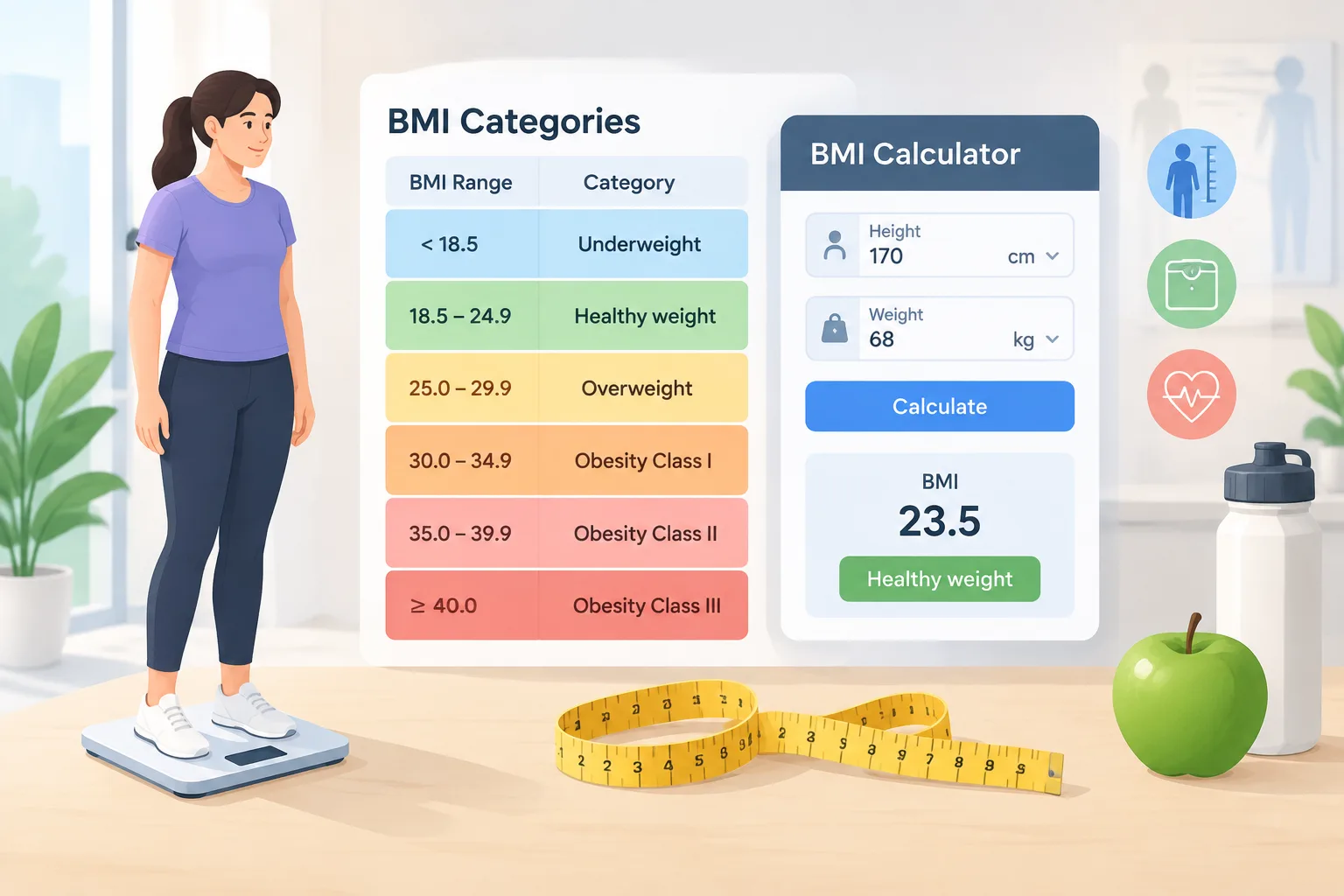
What Is BMI and What Do BMI Categories Mean?
BMI stands for Body Mass Index. It is a simple measurement that compares body weight with height. The purpose of BMI is to provide a standardized number that can help identify broad weight categories in populations and individuals.
BMI categories are ranges used to describe whether a BMI value falls below, within, or above commonly used reference levels. For many adults, these categories are generally organized as:
| BMI range | Category |
|---|---|
| Below 18.5 | Underweight |
| 18.5 to 24.9 | Normal weight range |
| 25.0 to 29.9 | Overweight |
| 30.0 or higher | Obesity range |
Obesity classes provide additional grouping for BMI values above 30:
| BMI range | Obesity class |
|---|---|
| 30.0 to 34.9 | Class 1 obesity |
| 35.0 to 39.9 | Class 2 obesity |
| 40.0 or higher | Class 3 obesity |
These ranges are reference categories rather than complete descriptions of a person's health. BMI does not directly measure body fat percentage, muscle mass, fitness level, body composition, or medical conditions.
How BMI Is Calculated
The BMI formula uses weight divided by height squared. The metric formula is:
In this formula, weight is measured in kilograms and height is measured in meters.
For people using pounds and inches, the commonly used formula is:
BMI Calculation Example
Suppose a person weighs 70 kilograms and is 1.75 meters tall.
The formula is:
First calculate height squared:
Then divide weight by the result:
The BMI is approximately 22.9, which falls within the commonly used normal weight range for adults.
The calculation only produces a numerical estimate. The category interpretation depends on the reference ranges being used and the person's individual circumstances.
Understanding Obesity Classes
Obesity classes divide higher BMI values into smaller groups to describe increasing BMI ranges.
Class 1 Obesity
Class 1 obesity generally refers to BMI values from 30.0 to 34.9. This category indicates a BMI above the commonly used obesity threshold.
Class 2 Obesity
Class 2 obesity generally refers to BMI values from 35.0 to 39.9. It represents a higher BMI range than Class 1.
Class 3 Obesity
Class 3 obesity generally refers to BMI values of 40.0 or above. This category is sometimes described as a higher-severity obesity range in medical contexts.
These classifications are useful for population studies and general screening, but they do not explain every aspect of health. Two people with the same BMI may have different levels of muscle, fat distribution, lifestyle factors, and health risks.
How to Use a BMI Calculator
A BMI calculator makes the calculation process faster and reduces manual errors. To check BMI:
- Open a BMI calculator tool such as the BMI calculator.
- Select the correct measurement system, such as metric or imperial units.
- Enter your height.
- Enter your weight.
- Review the calculated BMI value and category.
The calculator performs the formula automatically, but understanding the calculation helps you interpret the result correctly.
Common BMI Interpretation Mistakes and Limitations
Treating BMI as a Complete Health Measurement
BMI is only one screening measurement. It does not separate muscle from fat. For example, athletes with significant muscle mass may have a higher BMI without having the same body composition as someone with higher body fat.
Ignoring Age and Individual Differences
BMI categories are commonly designed for adults and may not apply in the same way to children, teenagers, older adults, or pregnant individuals. Different groups may require different assessment methods.
Assuming One Number Gives a Full Health Picture
A BMI value should be considered alongside other relevant information, such as overall health history, physical activity, nutrition, and professional assessments when needed.
Using BMI for Diagnosis
BMI categories can help describe weight ranges, but BMI alone does not diagnose a medical condition. If you have questions about your health measurements, a qualified healthcare professional can provide guidance based on your situation.
When BMI Categories Are Useful
BMI categories are useful for:
- Understanding a general weight classification.
- Tracking changes in body weight over time.
- Learning about population health statistics.
- Providing a starting point for health discussions.
BMI may be less informative when used alone for people with unusual body composition, including individuals with very high muscle mass or certain medical circumstances.
Frequently Asked Questions About BMI Categories and Obesity Classes
What BMI is considered obese?
A BMI of 30.0 or higher is commonly classified as being in the obesity range for adults. Obesity classes then divide this range into Class 1, Class 2, and Class 3 categories based on the BMI value.
How do I calculate my BMI manually?
You can calculate BMI by dividing weight in kilograms by height in meters squared. For example, a person weighing 80 kg and measuring 1.8 m tall would calculate BMI using (80 \div 1.8^2), resulting in a BMI of about 24.7.
Are BMI categories the same for everyone?
BMI categories are not a complete measure of individual health. They are general reference ranges and may need additional context depending on age, body composition, and personal health factors.
What is the difference between overweight and obesity?
Overweight generally refers to a BMI between 25.0 and 29.9, while obesity generally begins at a BMI of 30.0 or higher. The obesity range is further divided into classes based on higher BMI values.
Should I use BMI as my only health measurement?
No. BMI is a useful screening tool but should not be the only measurement used to understand health. Other information, including body composition and personal health factors, may also be important.
Use a BMI Calculator for a Quick Reference
A BMI calculator can help you quickly estimate your BMI category using a transparent formula. Use the BMI calculator to enter your measurements and view your result. Remember that BMI is a general reference tool and not a replacement for professional health advice.
Looking for more tools?
Try our free Free Calculators