401k limit 2026
401k Max Contribution 2026: Limits, Catch-Up, and What It Means for Your Savings
Learn the 401k max contribution 2026 limits, catch-up contribution rules, calculation examples, usage steps, and how to compare retirement contribution options with a calculator.
The 401k max contribution 2026 limit is the maximum amount you can contribute to a workplace 401(k) retirement plan during the year under IRS rules. It helps employees understand how much they may place into their accounts through payroll contributions and how additional catch-up contributions may apply for eligible older workers. This guide explains the limits, formulas, examples, and practical ways to estimate contributions using retirement planning tools.
What Is the 401k Max Contribution 2026 Limit?
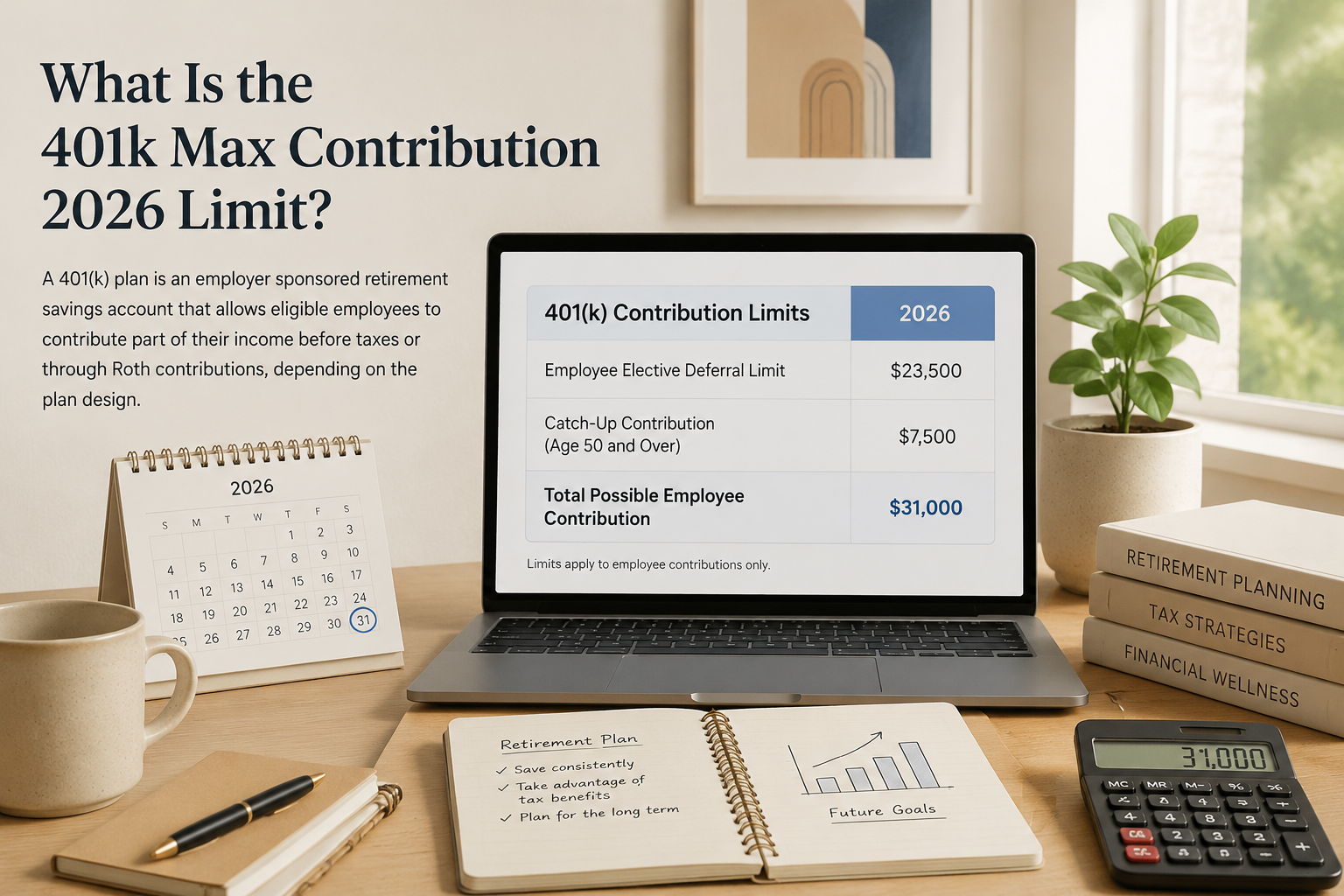
A 401(k) plan is an employer-sponsored retirement savings account that allows eligible employees to contribute part of their income before taxes or through Roth contributions, depending on the plan design. The annual contribution limit determines the maximum amount an employee can add from their own salary during a calendar year.
The 401k limit 2026 is important because contribution rules can affect retirement planning calculations, tax planning decisions, and how employees organize their long-term savings goals. The limit applies to employee elective deferrals and does not represent a required contribution amount.
For 2026, employees should check the current IRS contribution limits and their employer plan rules because individual circumstances may affect how much they can contribute. Factors such as age, compensation, employer matching, and plan restrictions can influence the final amount added to a retirement account.
A 401(k) contribution limit is a rule about account funding, not a prediction of investment performance. The amount in a retirement account can change over time based on contributions, fees, withdrawals, and investment returns.
401k Contribution Limits and Catch-Up Contribution Rules
Employee Contribution Limit
The standard employee contribution limit represents the maximum amount a participant can defer from their own paycheck during the year. This amount is generally adjusted periodically for inflation, so annual limits may change.
The basic calculation is:
Annual employee contribution = sum of eligible payroll contributions during the year
Example:
- Monthly salary contribution: $1,000
- Number of contribution months: 12
- Annual contribution: $1,000 × 12 = $12,000
In this example, the employee contributes $12,000 during the year. Whether this reaches the annual maximum depends on the official 2026 limit and the employee's available contribution room.
Catch-Up Contribution 2026
A catch-up contribution allows eligible older employees to contribute more than the standard annual employee limit. These additional contributions are designed to provide more retirement saving flexibility for people closer to retirement age.
The general formula is:
Maximum employee contribution with catch-up = standard contribution limit + eligible catch-up amount
Example:
- Standard annual limit: $X
- Eligible catch-up amount: $Y
- Maximum possible employee contribution: $X + $Y
The actual dollar values should be confirmed using current IRS limits because catch-up amounts can change between years.
Employer Contributions and Total Annual Additions
A 401(k) account may also receive employer contributions, such as matching contributions or profit-sharing contributions. These amounts usually follow separate limits from employee salary deferrals.
The total annual additions formula is generally:
Total annual additions = employee contributions + employer contributions + other eligible contributions
This distinction matters because someone may not be able to contribute the full total limit using employee payroll deductions alone.
How to Calculate Your 401k Contribution Amount
Calculating your planned 401(k) contribution can help you estimate whether your payroll settings match your savings goal.
Step 1: Determine Your Contribution Percentage
Many employees choose a percentage of their paycheck rather than a fixed dollar amount.
Formula:
Contribution amount per paycheck = gross paycheck × contribution percentage
Example:
- Gross paycheck: $4,000
- Contribution rate: 10%
- Contribution amount: $4,000 × 0.10 = $400
If you receive 26 paychecks per year:
Annual contribution = $400 × 26 = $10,400
Step 2: Compare Your Estimate With the Annual Limit
After calculating your expected annual contribution, compare it with the 2026 employee contribution limit.
If your planned contribution is below the limit, you may have additional contribution room. If it is above the limit, you may need to adjust your payroll percentage to avoid exceeding applicable rules.
You can also use a retirement planning tool such as the retirement calculator to estimate how regular contributions may affect future account values. These calculators provide estimates based on entered assumptions and do not guarantee future results.
Step 3: Consider Employer Matching Rules
Employer matching programs vary. Some employers match a percentage of employee contributions up to a certain level.
Example:
- Employee contributes: 5% of salary
- Employer match: available according to plan rules
- Total account contribution: employee contribution plus employer contribution
Reviewing your employer plan documents can help you understand how matching works and whether contribution timing affects eligibility.
401k vs IRA Limits 2026: Key Differences
A common question is how 401(k) contributions compare with IRA contributions. Both accounts can support retirement saving, but they have different rules.
A 401(k) is usually connected to an employer and may include employer contributions. An IRA is opened individually and has separate annual contribution limits, income rules, and eligibility requirements.
Important differences include:
| Feature | 401(k) | IRA |
|---|---|---|
| Account access | Usually through employer | Opened individually |
| Contribution rules | Workplace plan limits | IRA annual limits |
| Employer matching | May be available | Not included |
| Investment choices | Depends on plan | Depends on provider |
People comparing retirement options should review their own financial situation, tax considerations, and available account features. A calculator can help organize numbers, but it does not provide personal financial advice.
How to Use a 401k Contribution Calculator
A 401(k) contribution calculator can simplify the process of estimating annual savings.
Follow these steps:
- Enter your gross income or paycheck amount.
- Add your contribution percentage or planned contribution amount.
- Select the number of pay periods per year.
- Include employer contributions if you want to estimate total deposits.
- Compare the result with the applicable annual contribution limits.
For broader retirement estimates, you can also explore tools such as the compound interest calculator to understand how repeated contributions and assumed growth rates affect future values.
Common Mistakes and Limitations
Confusing Contribution Limits With Account Growth
The 401k max contribution 2026 limit only describes how much can be contributed. It does not determine how much money will be available at retirement.
Account growth depends on many factors, including investment performance, fees, withdrawals, and time.
Forgetting Catch-Up Eligibility Requirements
Not every employee qualifies for catch-up contributions. Eligibility depends on age and current retirement plan rules.
Ignoring Employer Plan Details
Employer plans may have specific rules for contribution timing, matching, and eligibility. Always review official plan information before making changes.
Treating Calculators as Personalized Advice
Online calculators provide estimates based on the information entered. They are useful for understanding scenarios but should not replace advice from qualified professionals when making important financial decisions.
Frequently Asked Questions
What is the 401k max contribution 2026 limit?
The 401k max contribution 2026 limit is the maximum amount an employee can contribute to a 401(k) plan during 2026 under applicable IRS rules. The exact dollar amount should be confirmed from current IRS guidance and your employer plan details.
How does catch up contribution 2026 work?
A catch-up contribution allows eligible older employees to contribute above the standard employee contribution limit. The additional amount depends on current rules and eligibility requirements.
Can I contribute the maximum amount to both a 401(k) and an IRA in 2026?
A person may be able to contribute to both accounts if they meet the requirements for each plan. However, 401(k) and IRA limits are separate and follow different rules.
How do I calculate my 401(k) contribution from my paycheck?
Multiply your gross paycheck by your contribution percentage, then multiply the result by the number of pay periods in the year. Compare the estimate with the applicable annual contribution limit.
Does reaching the 401(k) contribution limit guarantee better retirement results?
No. Reaching a contribution limit only means you contributed up to the allowed amount. Future account value depends on many factors, including time, fees, withdrawals, and investment performance.
Use a Retirement Calculator to Plan Your Estimates
Understanding contribution limits is one part of retirement planning. Use the retirement calculator to estimate savings scenarios, compare contribution amounts, and organize your long-term planning assumptions. The calculator is an educational tool designed to help you understand possible outcomes based on the numbers you provide.
Looking for more tools?
Try our free Free Calculators