year end financial checklist
Year-End Financial Checklist: Steps to Review Your Money Before December Ends
A practical year-end financial checklist covering tax review, savings, debt, retirement planning, and financial organization. Learn what to check and how calculators can help you estimate key numbers.
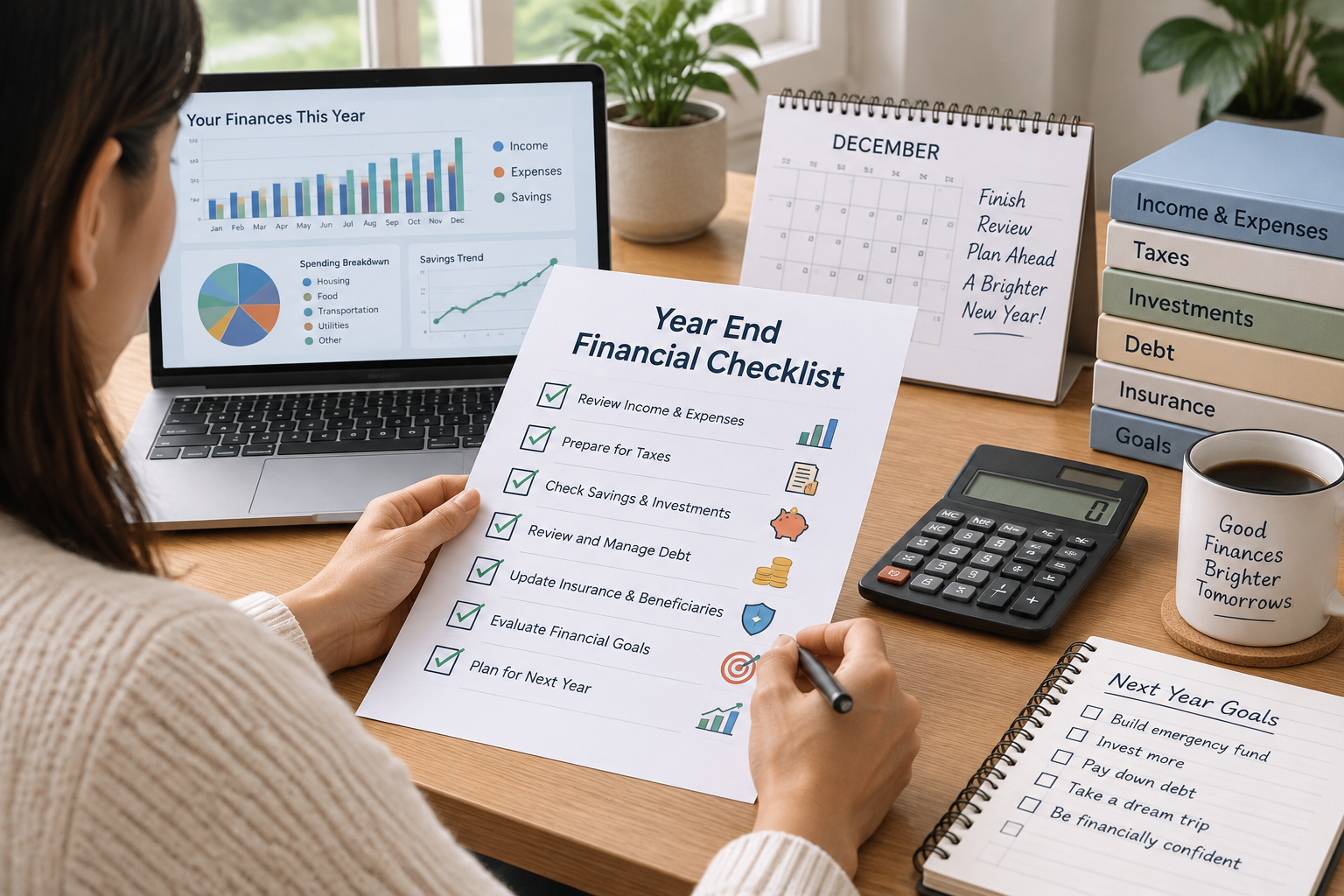
A year-end financial checklist is a practical review of your money situation before the calendar year closes. It helps individuals organize income, expenses, taxes, savings, debt, and future goals. This checklist is useful for anyone who wants a clearer view of their finances, from households preparing tax information to people reviewing long-term plans. You can use free financial calculators to estimate key figures, compare scenarios, and organize decisions using transparent formulas.
What Is a Year-End Financial Checklist?
A year-end financial checklist is a set of financial review tasks completed near the end of the year. The goal is not to predict future results or guarantee financial outcomes. Instead, it helps you collect information, identify areas that may need attention, and prepare for the next year.
Many people use December as a review point because annual income records, tax documents, savings contributions, and spending patterns are easier to evaluate after most yearly activity has happened.
A typical checklist includes:
- Reviewing annual income and expenses
- Organizing tax-related documents
- Checking retirement and savings contributions
- Reviewing debt balances and interest costs
- Updating financial goals
- Calculating important personal finance numbers
For example, someone may review whether their retirement contributions match their personal goals, while another person may simply want to understand their yearly spending pattern.
You can also use tools such as the retirement calculator or compound interest calculator to explore how current savings decisions may affect future calculations.
Why a Year-End Financial Review Matters
Financial information can become difficult to track when income, bills, subscriptions, savings, and investments are spread across different accounts. A year-end review creates a single point to organize this information.
A checklist can help you:
- Find missing documents before tax deadlines
- Understand where money went during the year
- Review progress toward savings targets
- Identify recurring expenses that may need review
- Prepare a more realistic budget for the next year
The process is mainly about awareness and organization. Financial calculators can support the process by showing calculations clearly, but the results depend on the information entered and the assumptions used.
Year-End Financial Checklist Steps
1. Review Your Annual Income
Start by collecting information about money received during the year. This may include salary, freelance income, business income, interest, or other sources.
A simple income review can be calculated as:
Annual income = Sum of all income received during the year
Example:
- Monthly salary: $4,000
- Months worked: 12
- Additional income: $3,000
Annual income:
($4,000 × 12) + $3,000 = $51,000
This number can help you compare yearly income changes and prepare financial records.
2. Review Your Spending
Understanding expenses is one of the most useful parts of a year-end review. Separate spending into categories such as housing, transportation, food, insurance, debt payments, and personal expenses.
A basic calculation is:
Annual spending = Total expenses from all categories
Example:
- Housing: $18,000
- Food: $6,000
- Transportation: $3,000
- Other expenses: $8,000
Annual spending:
$18,000 + $6,000 + $3,000 + $8,000 = $35,000
The difference between income and spending gives a simple cash flow view:
Annual cash flow = Annual income − Annual spending
Example:
$51,000 − $35,000 = $16,000
This does not represent total wealth or investment performance, but it provides a basic overview of yearly money movement.
3. Check Tax-Related Information
Many people use year-end as a time to organize tax records and review possible tax-related actions. Tax rules vary by location and personal circumstances, so official tax guidance should always be checked when making decisions.
Common year-end tasks include:
- Collecting income statements
- Reviewing deductible expenses where applicable
- Organizing donation records
- Checking retirement contribution information
- Preparing documents for tax filing
Some tax-related actions have deadlines and limits that can change. For current tax rules, refer to official tax authorities and applicable guidance.
4. Review Savings and Retirement Contributions
Savings reviews help you understand whether your current contributions match your personal objectives.
A simple savings rate calculation is:
Savings rate = (Amount saved ÷ Income) × 100
Example:
- Annual income: $60,000
- Annual savings: $6,000
Savings rate:
($6,000 ÷ $60,000) × 100 = 10%
This percentage describes past saving behavior. It does not predict future results.
You can compare different savings scenarios with the future value calculator or review retirement assumptions with the retirement calculator.
5. Review Debt and Interest Costs
Debt review helps you understand current balances and the cost of borrowing.
A basic interest estimate can be represented as:
Interest amount = Principal × Annual interest rate × Time period
Example:
- Loan balance: $10,000
- Annual interest rate: 5%
- Time period: 1 year
Estimated simple interest:
$10,000 × 0.05 × 1 = $500
Actual loan costs may differ because many loans use different repayment schedules, compounding methods, fees, or changing rates.
Use tools such as the loan calculator or amortization calculator to understand payment structures.
How to Complete a Year-End Financial Checklist
Follow these steps to make the review easier:
Step 1: Gather Financial Records
Collect bank statements, income records, bills, loan statements, and savings information. Having complete records improves the accuracy of your calculations.
Step 2: Enter Numbers Into Relevant Calculators
Use calculators to check specific financial questions. For example:
- Use a mortgage calculator to estimate mortgage payments.
- Use a take-home pay calculator to review after-tax income estimates.
- Use a percentage calculator for simple financial comparisons.
Step 3: Record Key Results
Create a simple summary with:
- Total income
- Total expenses
- Savings amount
- Debt balances
- Important financial deadlines
Step 4: Set Next-Year Review Points
A year-end checklist works best when combined with regular reviews throughout the year. Monthly or quarterly checks can make the next annual review easier.
Common Mistakes and Limitations
Mistake 1: Treating Estimates as Exact Results
Calculators depend on the information entered. Changes in income, expenses, rates, taxes, or personal circumstances can affect results.
Mistake 2: Ignoring Personal Circumstances
A general checklist cannot account for every situation. Tax rules, legal requirements, and financial decisions may require professional guidance depending on your circumstances.
Mistake 3: Focusing Only on One Number
A single number, such as income or savings, does not describe your complete financial position. A broader review usually provides better context.
Mistake 4: Waiting Until the Last Day of the Year
Some financial tasks may require preparation. Reviewing information earlier can make it easier to collect documents and understand available options.
Frequently Asked Questions
What should be included in a year-end financial checklist?
A year-end financial checklist usually includes reviewing income, expenses, taxes, savings, retirement contributions, debt, and financial goals. The exact items depend on personal circumstances.
What are some year end tax moves to review?
Common year-end tax moves may include organizing tax documents, checking contribution records, and reviewing applicable deductions or credits. Tax rules vary, so confirm details with official tax resources or a qualified professional.
How do I calculate my year-end savings rate?
Calculate your savings rate by dividing the amount saved during the year by your income, then multiplying by 100. For example, saving $5,000 from a $50,000 income gives a 10% savings rate.
Can a financial calculator replace financial advice?
No. A financial calculator provides estimates based on entered information and assumptions. It is a tool for understanding numbers, not a replacement for personalized financial advice.
When should I complete a year-end financial review?
Many people review finances during the final months of the year, especially before tax deadlines or major financial decisions. Reviewing earlier can provide more time to organize information.
Use Calculator Lists for Your Financial Review
A year-end financial checklist becomes easier when important numbers are organized and calculated clearly. Calculator Lists provides free online calculators with transparent formulas for common financial tasks. Use the relevant calculator tools to review estimates, compare scenarios, and better understand your financial information before the new year.
Looking for more tools?
Try our free Free Calculators