Health & Fitness
FFMI vs BMI: Which Body Composition Metric Should You Use?
An FFMI calculator helps estimate fat-free mass index, a body composition metric that adjusts lean mass for height. Unlike BMI, which only compares weight and height, FFMI considers fat-free mass and can provide more context for people who want to understand body composition. This guide explains what FFMI means, how it is calculated, how it differs from BMI, and who may find it useful.
What is FFMI?
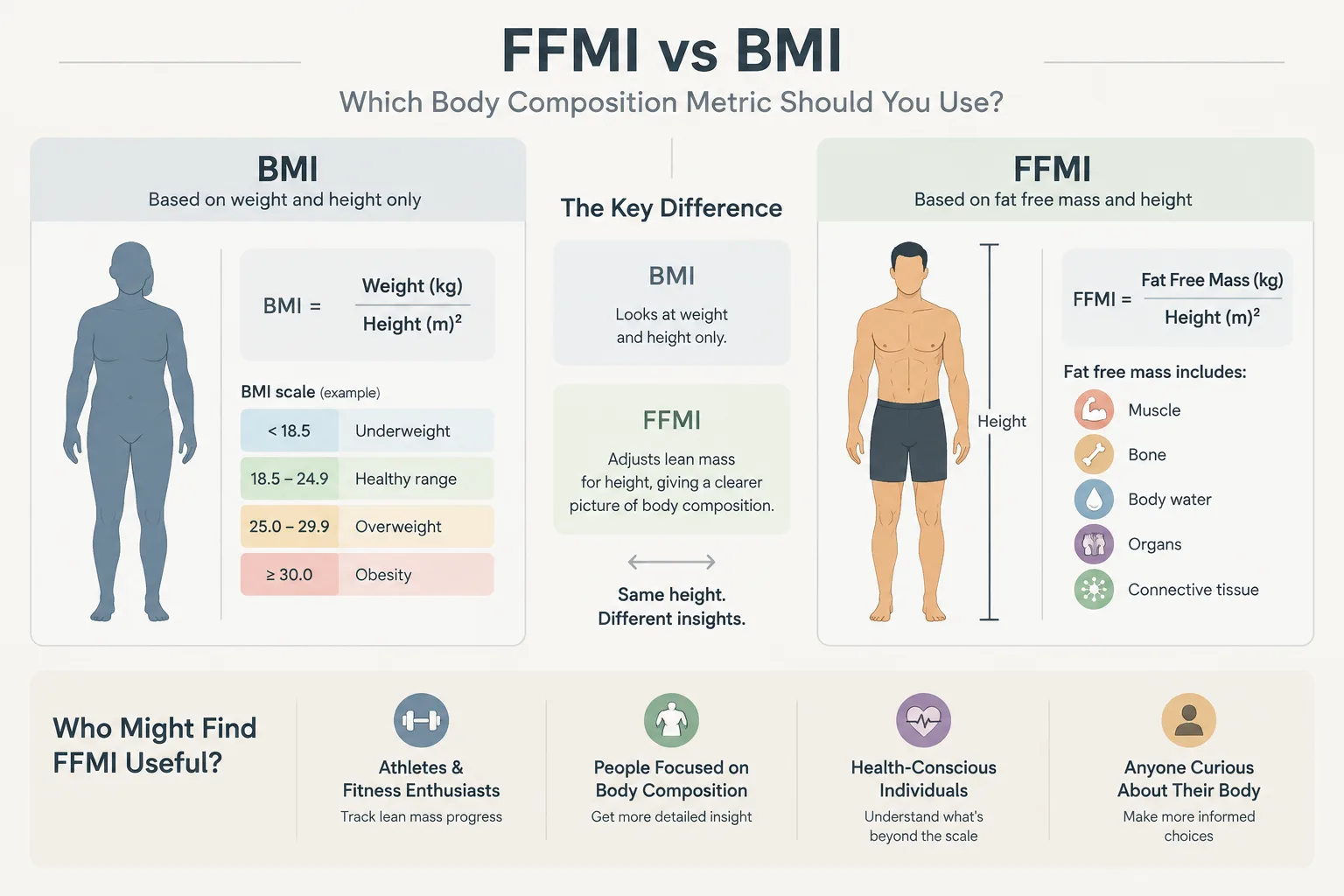
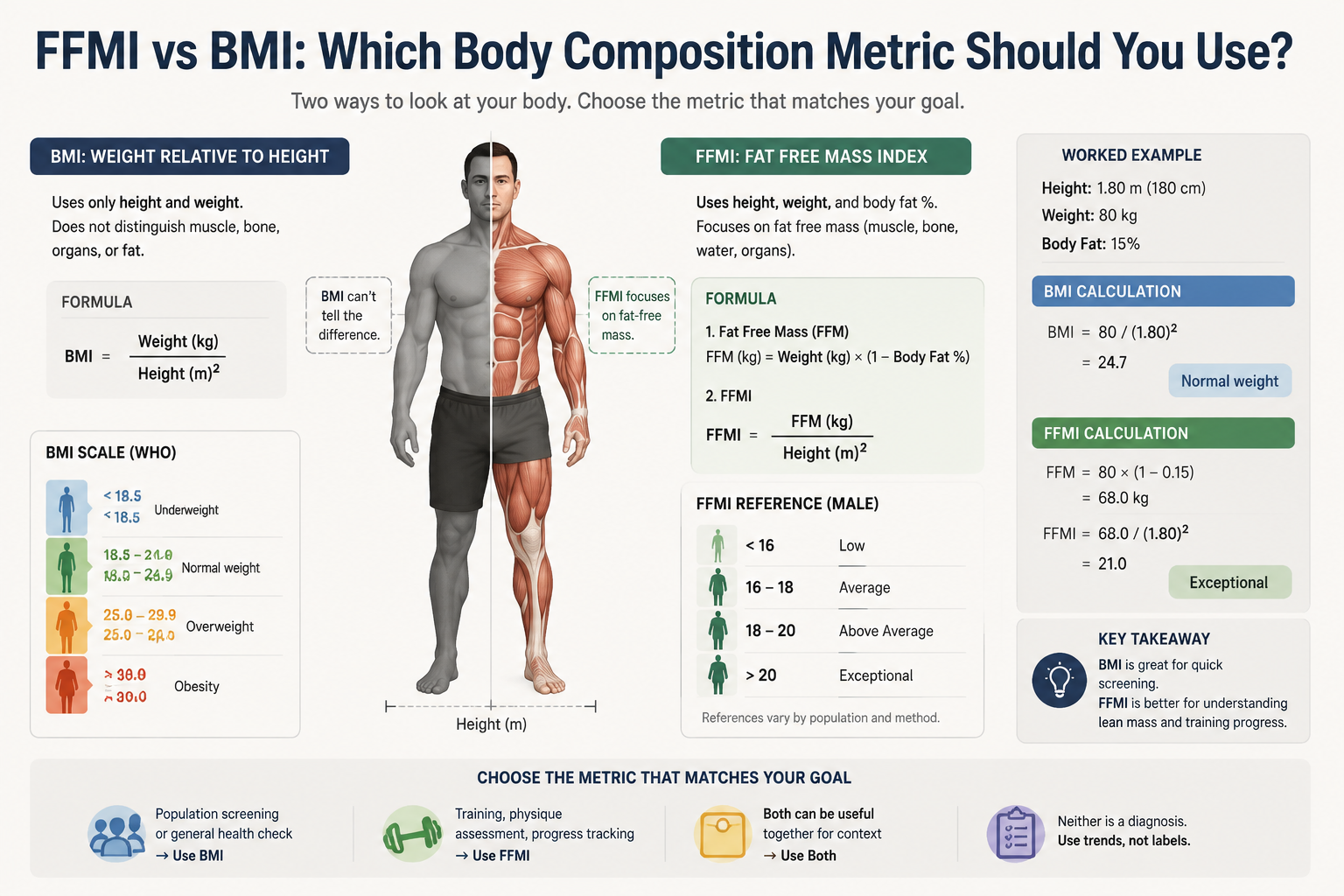
FFMI stands for Fat-Free Mass Index. It is a measurement that estimates the amount of fat-free mass a person has relative to their height. Fat-free mass includes body components such as muscle, bone, organs, and water, while excluding body fat.
A FFMI calculator uses information such as body weight, body fat percentage, and height to estimate FFMI. The result is a numerical value that can be used to compare body composition changes over time.
FFMI is often discussed alongside BMI because both measurements use height as part of their calculation. However, they answer different questions:
- BMI shows the relationship between total body weight and height.
- FFMI focuses on fat-free mass relative to height.
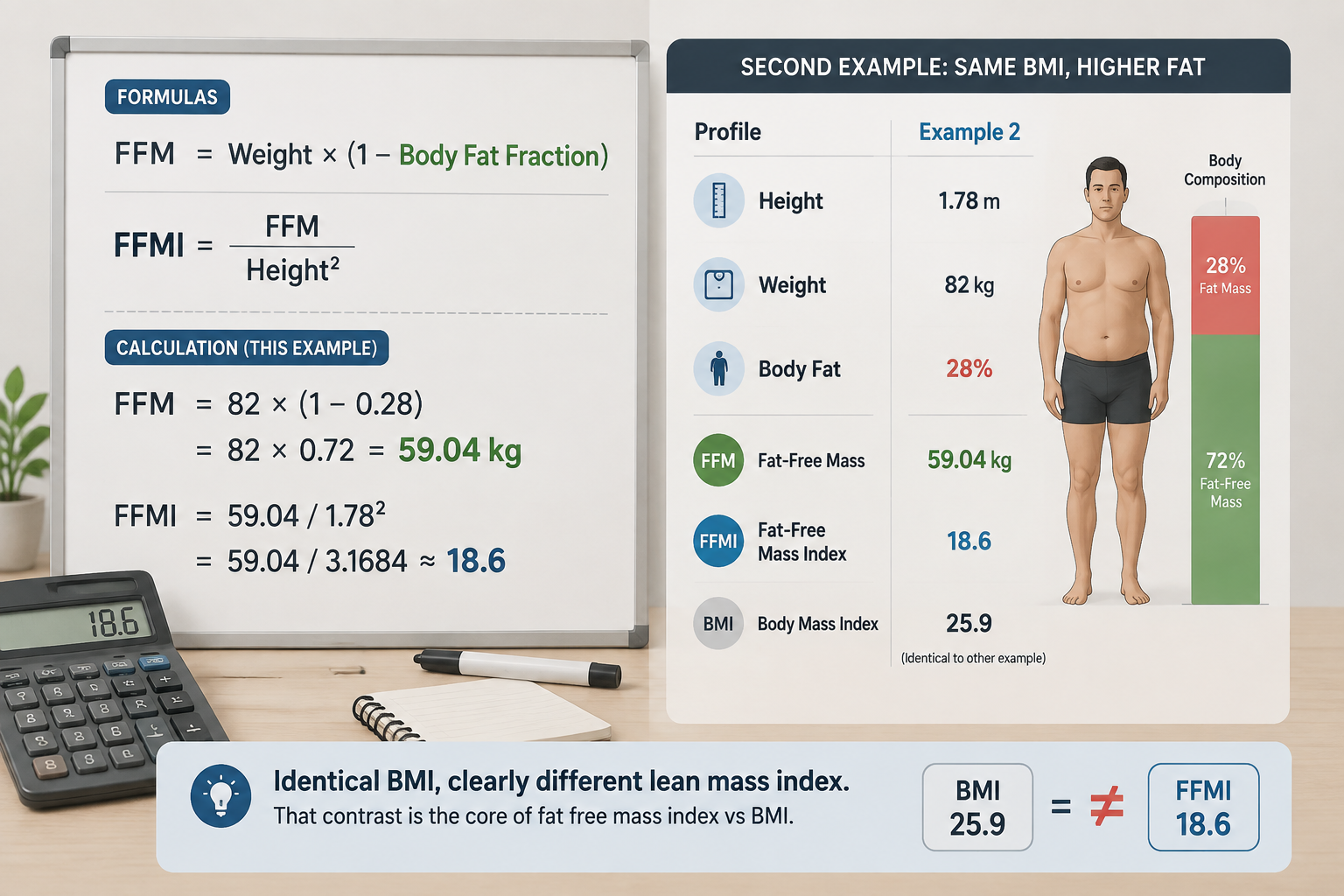
BMI can be useful as a general population screening measure, but it does not distinguish between fat mass and lean mass. For example, two people with the same height and weight may have different body compositions if one has more muscle and less body fat.
For additional context, you can also compare results with a BMI calculator and an ideal weight calculator, while remembering that these tools provide estimates rather than medical evaluations.
FFMI vs BMI: Key Differences
BMI calculation
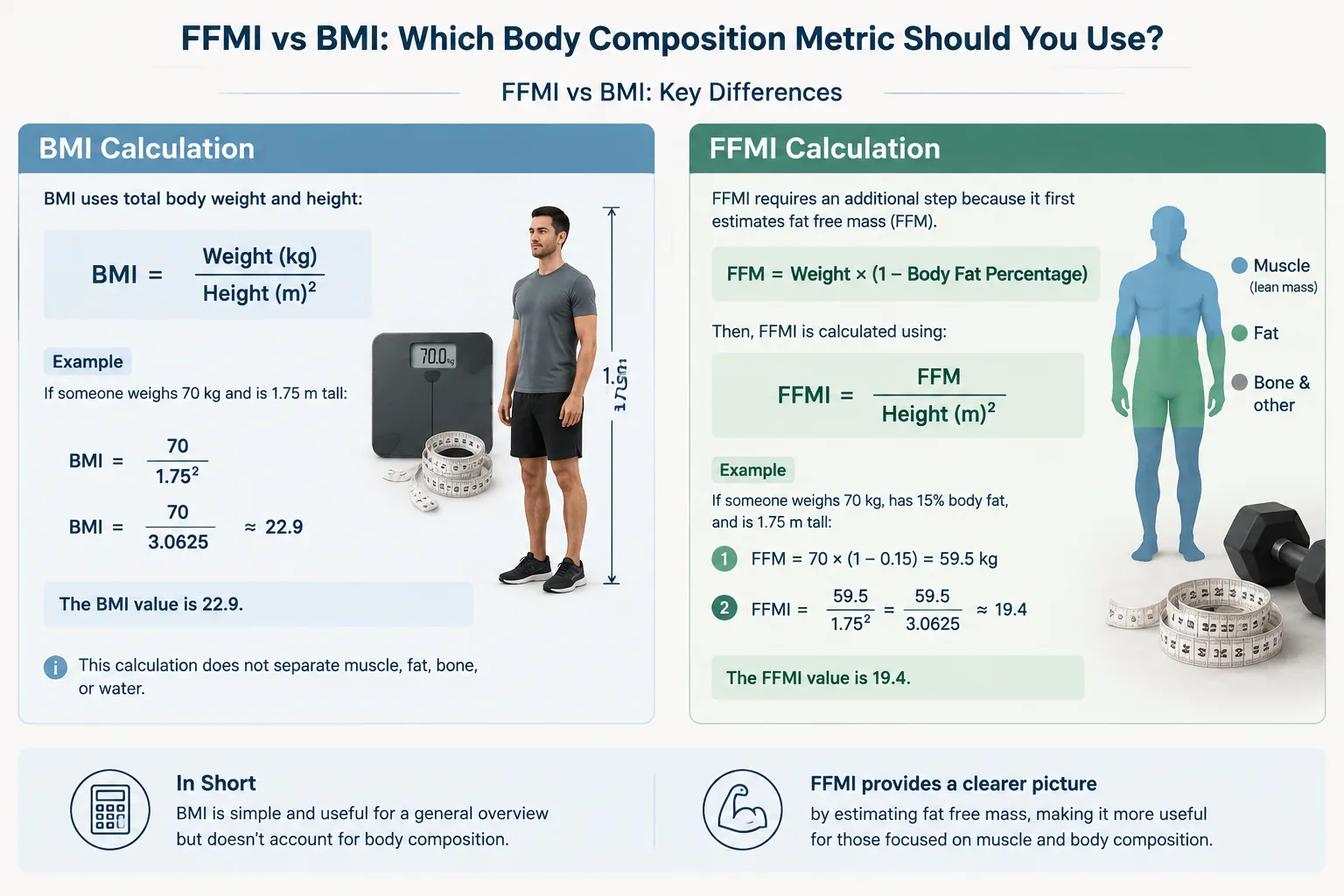
BMI uses total body weight and height:
For example, if someone weighs 70 kg and is 1.75 m tall:
The BMI value is 22.9. This calculation does not separate muscle, fat, bone, or water.
FFMI calculation
FFMI requires an additional step because it first estimates fat-free mass (FFM).
The fat-free mass formula is:
For example, a person weighing 80 kg with 20% body fat has:
The FFMI formula is:
Using a height of 1.80 m:
The estimated FFMI is approximately 19.8.
These examples show the main difference between the two metrics: BMI uses total weight, while FFMI separates fat-free mass from total body weight.
How to Use an FFMI Calculator
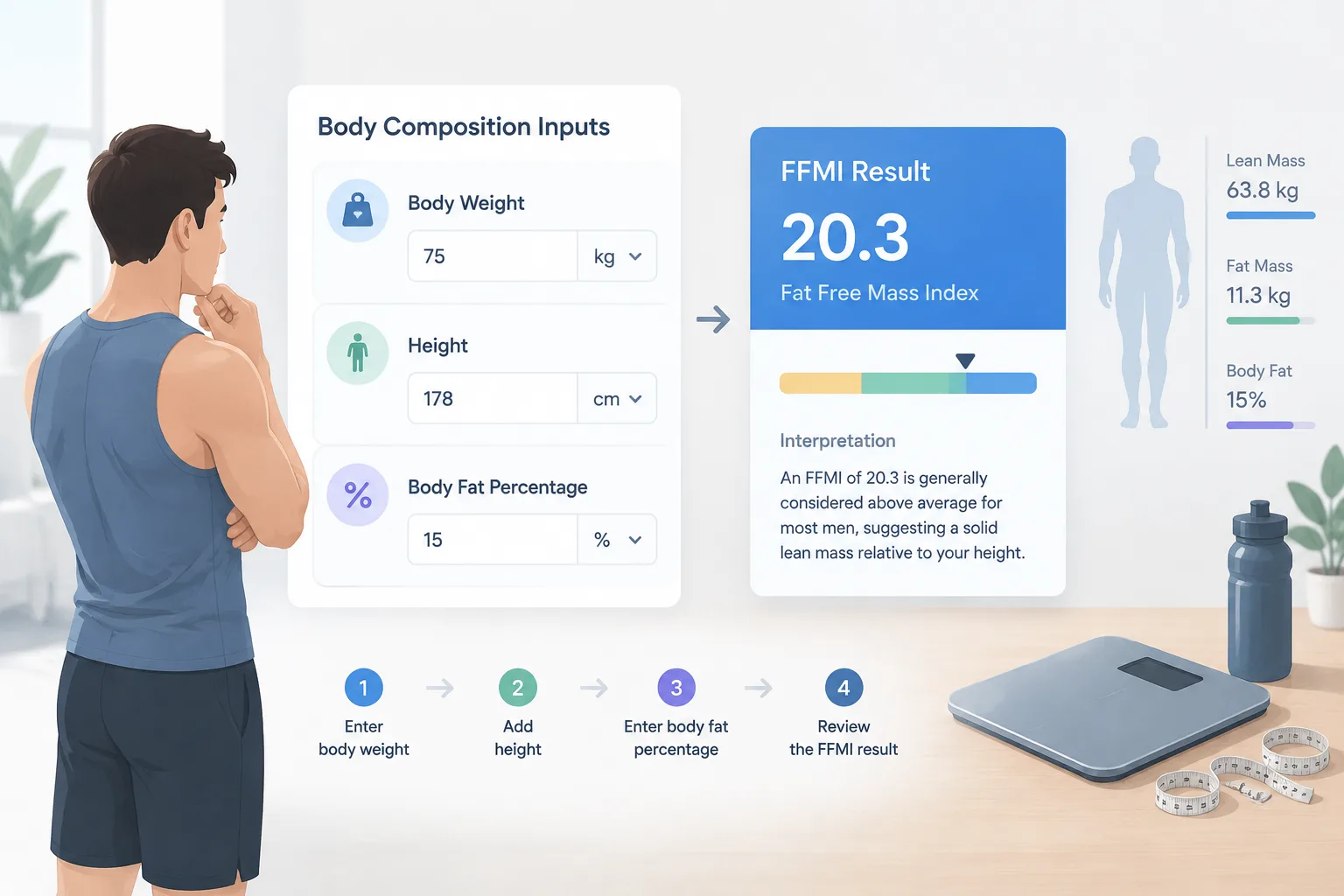
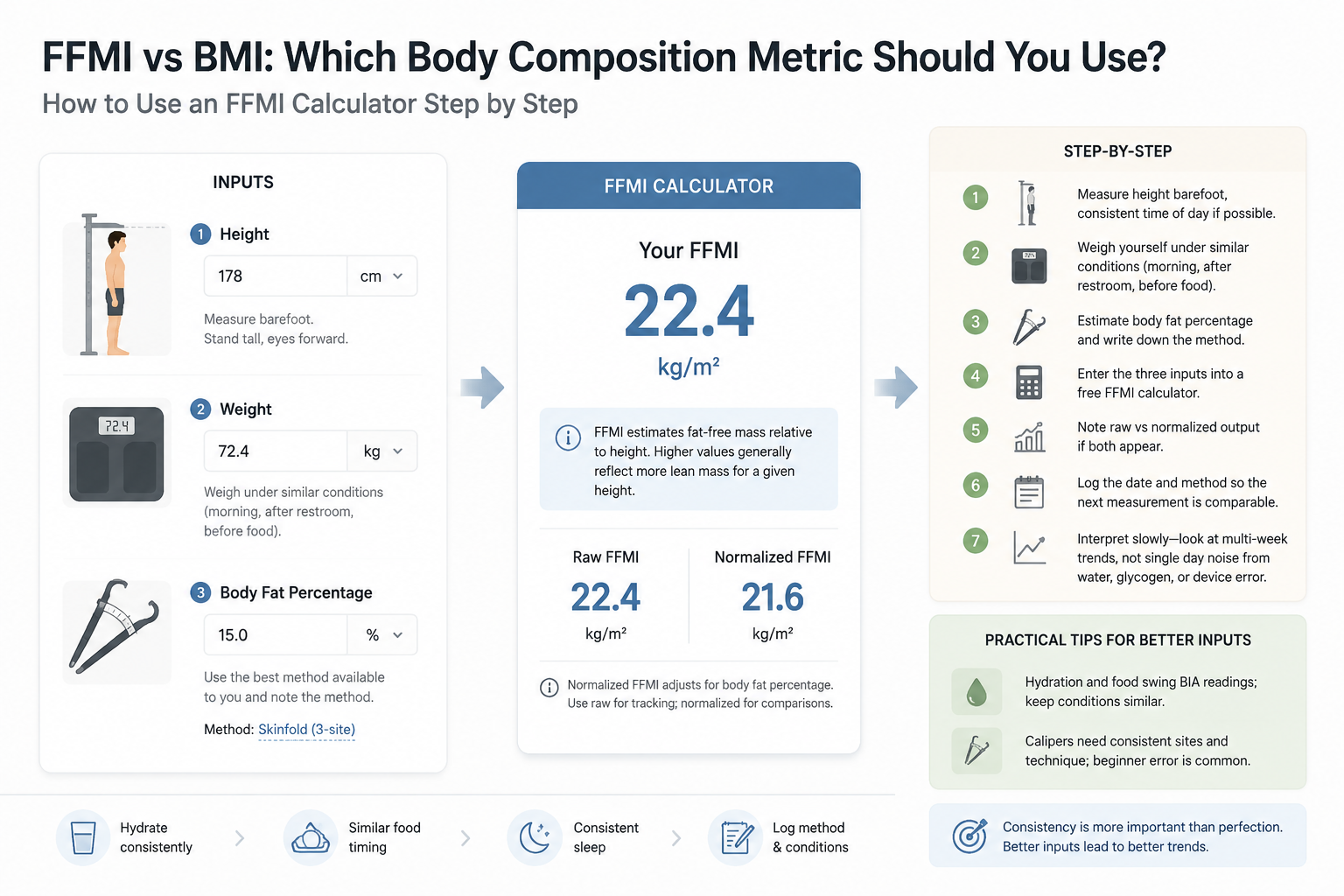
Using an online FFMI calculator is straightforward:
1. Enter your body weight
Provide your current body weight using kilograms or the supported unit option. Accurate measurements help produce a more useful estimate.
2. Add your height
Height is required because FFMI adjusts fat-free mass based on body size. A small height difference can change the calculated index.
3. Enter body fat percentage
Body fat percentage is needed to estimate fat-free mass. The accuracy of the FFMI result depends partly on how reliable this input is.
4. Review the FFMI result
The calculator will display your estimated FFMI value. You can use it as a reference point for tracking changes in body composition over time.
A single FFMI number does not provide a complete picture of health, fitness, or physical performance. Factors such as age, genetics, training history, hydration, and measurement method can influence results.
Common Mistakes and Limits of FFMI
Confusing FFMI with a health diagnosis
FFMI is a calculation tool, not a medical assessment. A higher or lower value alone does not determine whether someone is healthy.
Using inaccurate body fat measurements
Because FFMI depends on fat-free mass, an inaccurate body fat percentage can affect the final result. Different measurement methods may produce different estimates.
Comparing numbers without considering context
FFMI values should be interpreted with personal context, including body size, activity level, and measurement conditions. Comparing results between individuals may not always be meaningful.
Treating FFMI as a replacement for BMI
FFMI and BMI measure different aspects of body composition. Many people use both measurements together because each provides different information.
If you are exploring other health-related estimates, Calculator Lists also provides tools such as a calorie calculator, which can help estimate daily calorie needs based on user inputs, and an age calculator for date-based age calculations.
When Should You Use FFMI Instead of BMI?
FFMI may be useful when someone wants more information about lean mass relative to height, especially when body weight alone may not describe body composition well.
For example, people who do resistance training may have higher body weight because of increased muscle mass. In such cases, BMI alone may not show the difference between muscle and fat.
BMI may still be useful for broad population-level screening because it is simple and requires only height and weight. FFMI requires additional information and may be more specific for body composition discussions.
The best choice depends on the question being asked:
- Use BMI when you want a simple height-to-weight ratio.
- Use FFMI when you want to estimate fat-free mass relative to height.
- Use both when you want multiple perspectives on body composition.
Frequently Asked Questions
What does an FFMI calculator measure?
An FFMI calculator estimates fat-free mass index by using body weight, body fat percentage, and height. It shows how much fat-free mass a person has relative to their height.
Is FFMI better than BMI?
FFMI is not simply better than BMI because they measure different things. FFMI provides more information about fat-free mass, while BMI is a simpler measurement based only on weight and height.
How accurate is an FFMI calculator?
The accuracy depends on the quality of the input data, especially body fat percentage. An FFMI calculator provides an estimate and should not be treated as a medical measurement.
Can I use FFMI to track fitness progress?
FFMI can be used as one way to monitor changes in estimated fat-free mass over time. Consistent measurement methods are important when comparing results.
Try the FFMI Calculator
Use the Calculator Lists FFMI calculator to quickly estimate your fat-free mass index. Enter your measurements to see the calculation based on transparent formulas and use the result as a general body composition reference.
Looking for more tools?
Try our free Health & Fitness Calculators