formulas
BMI Formula: How to Calculate Body Mass Index
Learn the BMI formula, how BMI is calculated in metric and imperial units, worked examples, usage steps, limitations, and common questions.
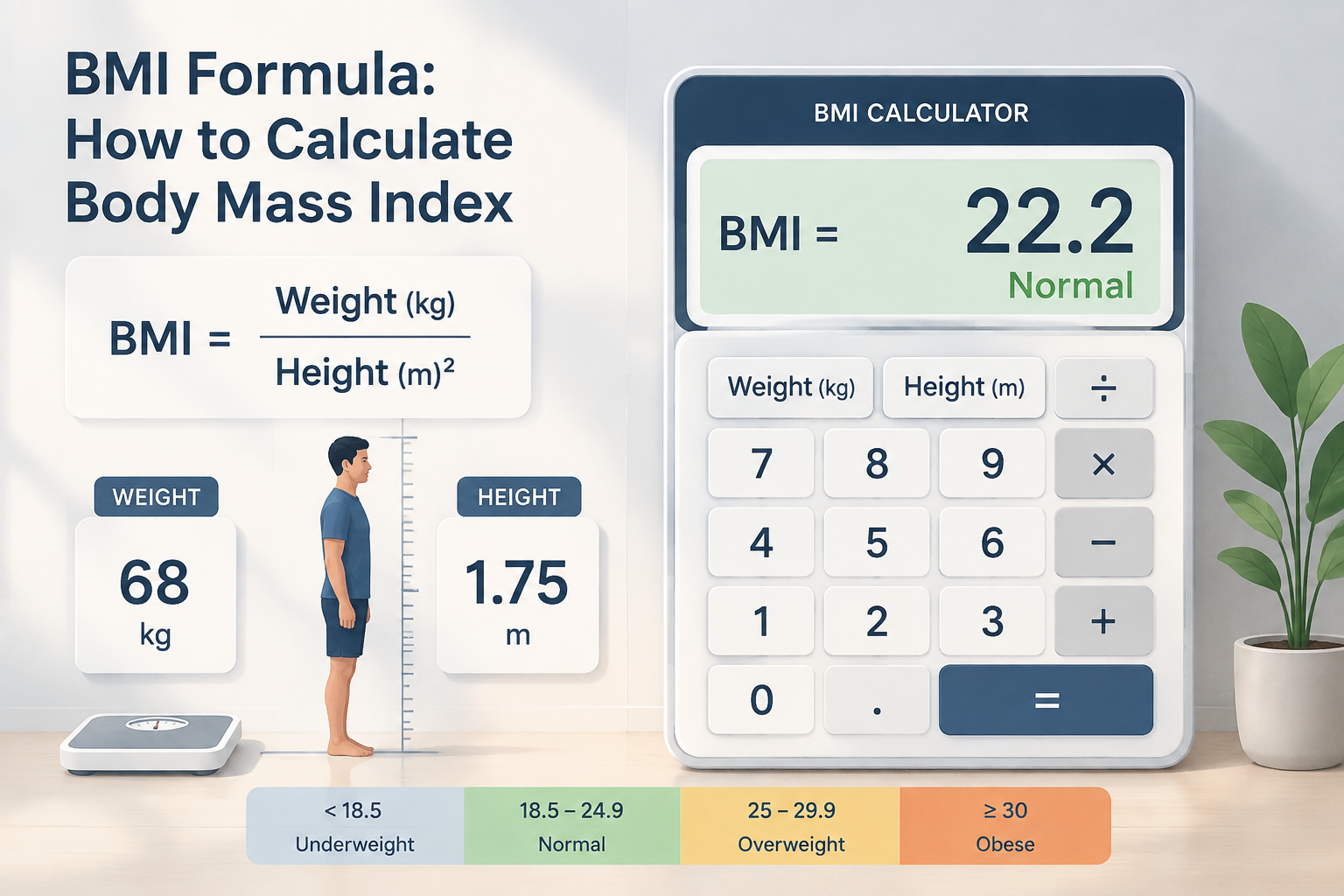
The BMI formula is a simple calculation used to estimate body mass index from a person's height and weight. It is calculated by dividing weight by height squared. The formula is used by adults, researchers, and health professionals as a general screening measure to understand weight relative to height. You can use the BMI calculator to quickly calculate your result without doing the math manually.
What Is the BMI Formula?
BMI stands for body mass index. The BMI formula compares a person's body weight with their height to produce a single number. This number can be used as one general indicator when reviewing weight status.
The basic BMI formula is:
BMI = weight ÷ height²
The result is a numerical value expressed in kilograms per square meter (kg/m²) when metric measurements are used.
BMI is commonly used because it is simple, fast, and requires only two measurements: weight and height. However, BMI does not directly measure body fat percentage, muscle mass, body shape, or overall health. It should be viewed as a screening measurement rather than a complete health assessment.
BMI Calculation Formula in Metric and Imperial Units
Metric BMI Formula
When using kilograms and meters, the formula is:
BMI = weight (kg) ÷ height (m)²
For example:
- Weight: 70 kg
- Height: 1.75 m
First, square the height:
1.75 × 1.75 = 3.0625
Then divide the weight by the squared height:
70 ÷ 3.0625 = 22.86
The BMI is approximately 22.9 kg/m².
Imperial BMI Formula
When using pounds and inches, the formula is:
BMI = weight (lb) ÷ height (in)² × 703
The number 703 is a conversion factor that adjusts the calculation from imperial units to the same BMI scale used with metric measurements.
For example:
- Weight: 154 lb
- Height: 69 in
First, square the height:
69 × 69 = 4761
Then apply the formula:
154 ÷ 4761 × 703 = 22.73
The BMI is approximately 22.7 kg/m².
The small difference between examples can occur because of rounding. For the most accurate result, use consistent measurements and avoid rounding until the final step.
How to Use the BMI Formula Step by Step
Follow these steps to calculate BMI manually:
Step 1: Measure Your Weight
Record your body weight using a consistent unit system. The metric formula uses kilograms, while the imperial formula uses pounds.
Step 2: Measure Your Height
Measure height carefully. The metric formula requires meters, and the imperial formula requires inches.
Step 3: Square Your Height
Multiply your height by itself.
For example:
1.80 m × 1.80 m = 3.24
Step 4: Divide Weight by Height Squared
Use the correct formula for your measurement system.
Metric example:
80 kg ÷ 3.24 = 24.69
BMI = approximately 24.7 kg/m².
You can also use the BMI calculator to complete these steps automatically and reduce calculation errors.
Understanding BMI Results and Limitations
BMI values are often grouped into general categories for adults, but these ranges are not a diagnosis and do not describe every individual's health situation.
A BMI result can be affected by factors such as:
- Muscle mass
- Age
- Body composition
- Distribution of body fat
- Pregnancy status
- Differences among populations
For example, someone with high muscle mass may have a higher BMI because muscle contributes to body weight. Likewise, BMI may not fully describe health risks for every person.
The BMI formula is most useful when combined with other information, such as lifestyle factors, medical history, and professional health assessments when appropriate.
Common Mistakes When Calculating BMI
Using the Wrong Height Unit
A common error is entering centimeters directly into the metric formula without converting them to meters. For example, 175 centimeters should be written as 1.75 meters.
Forgetting to Square Height
BMI is not weight divided by height. The height value must be multiplied by itself before dividing.
Mixing Metric and Imperial Measurements
Do not combine kilograms with inches or pounds with meters. Choose one formula and use matching units throughout the calculation.
Treating BMI as a Complete Health Measurement
BMI provides a useful reference point, but it does not measure all aspects of health. It should not replace professional medical guidance when health concerns exist.
Frequently Asked Questions About the BMI Formula
What is the BMI formula?
The BMI formula is weight divided by height squared. In metric units, it is BMI = weight (kg) ÷ height (m)². In imperial units, it is BMI = weight (lb) ÷ height (in)² × 703.
How do I calculate BMI without a calculator?
To calculate BMI manually, measure your weight and height, convert them to matching units, square your height, and divide your weight by the squared height. A calculator tool can help verify the result quickly.
Is the BMI formula the same for men and women?
Yes, the mathematical BMI formula is the same for adults of all sexes. However, BMI results may need different interpretation because body composition and health factors vary between individuals.
What units does BMI use?
BMI is usually reported in kilograms per square meter (kg/m²). The imperial formula uses pounds and inches with a conversion factor of 703 to produce the same BMI scale.
Is BMI an accurate measure of body fat?
BMI is not a direct measurement of body fat. It is a screening tool that uses height and weight, so it may not reflect differences in muscle mass, body composition, or other individual factors.
Use the BMI Formula With an Online Calculator
The BMI formula is easy to understand and calculate, but an online tool can make the process faster and help avoid unit conversion mistakes. Use the BMI calculator to enter your height and weight and view your calculated BMI value.
Remember that BMI is a general indicator, not a complete measurement of health. Use it as one piece of information alongside other relevant factors when evaluating your health and wellness.
More from the Wiki
Other definitions and formulas from the calculator wiki.
Put the formula to work
Skip the manual math - use the free calculator built on this formula.
Open Calculators